
The concept of relatability is a core concept of internet humor and humor in general. We laugh at things we can see ourselves in. It’s where the old standup trope of “What’s the deal with airline food?” comes from. It’s an observation based on shared reality. Sometimes, merely pointing it out is the joke. It’s something that we all notice but rarely say out loud. Saying it out loud makes us giggle because it makes us feel less alone. It’s a beautiful concept, and one of the only things that unites us in a divided world. But algorithms have narrowed our online field of view. We’re served up videos and pictures that align perfectly with our tastes and preferences. If you’re interested in crocheting and baby capybaras, then crocheting and baby capybaras you shall get. There’s a certain pleasure in this; our instincts are immediately flattered, and we’re only shown the things that we might enjoy. However, these types of echo-chambers harm us much more than they help us.
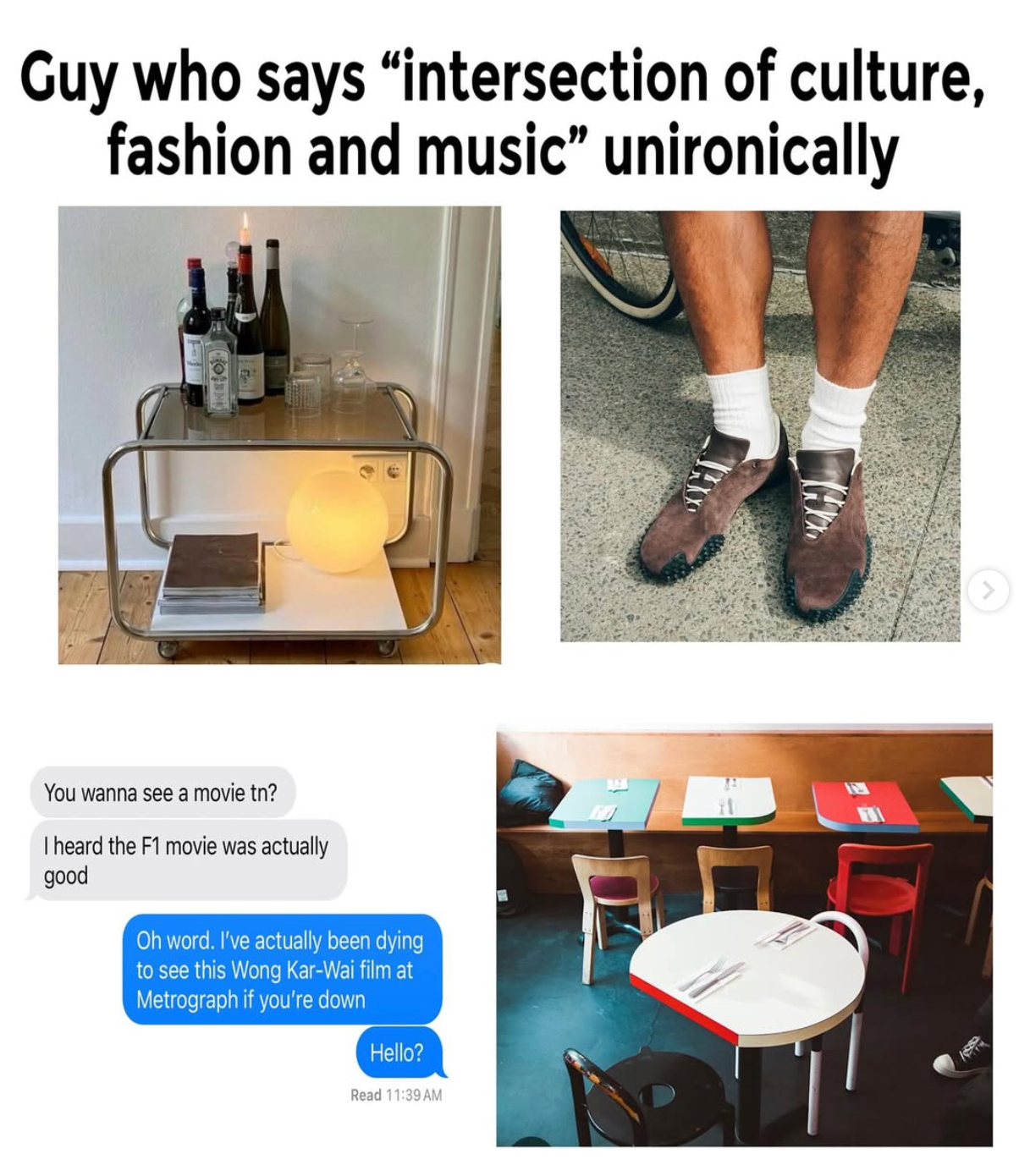
Take meme accounts like nolitadirtbag or socks_house_meeting, which are hyperspecific meme pages dedicated to particular subcultures (in this case, downtown Manhattan hipster culture and London yuppie culture, respectively). They satirize restaurants, clothing items, and types of people you might meet within these milieus. And if you’re a part of the in-group, that is, you can decode its memes, then there is something fun about them. They reaffirm your status in the group and make you feel like you’re a part of something. But widely relatable? Absolutely not. They would be nothing more than gibberish to those outside of the group. They inspire a sense of isolation from the world at large. The deeper we dive into our own niche, the more we lose touch with those around us.
“Vagueposting” does this too. If you’re unfamiliar, it’s the term given to the practice of posting something (a meme, a tweet, a take), stripped of all its original context to drive engagement to the post. Slews of people swarm in to comment, “What is this about?” and before you know it, you’ve got a hit post. It’s a frustrating way to game the algorithm, and it’s the opposite of relatable. It makes us search for context that may or may not even exist, and we’re left feeling outside of the joke.
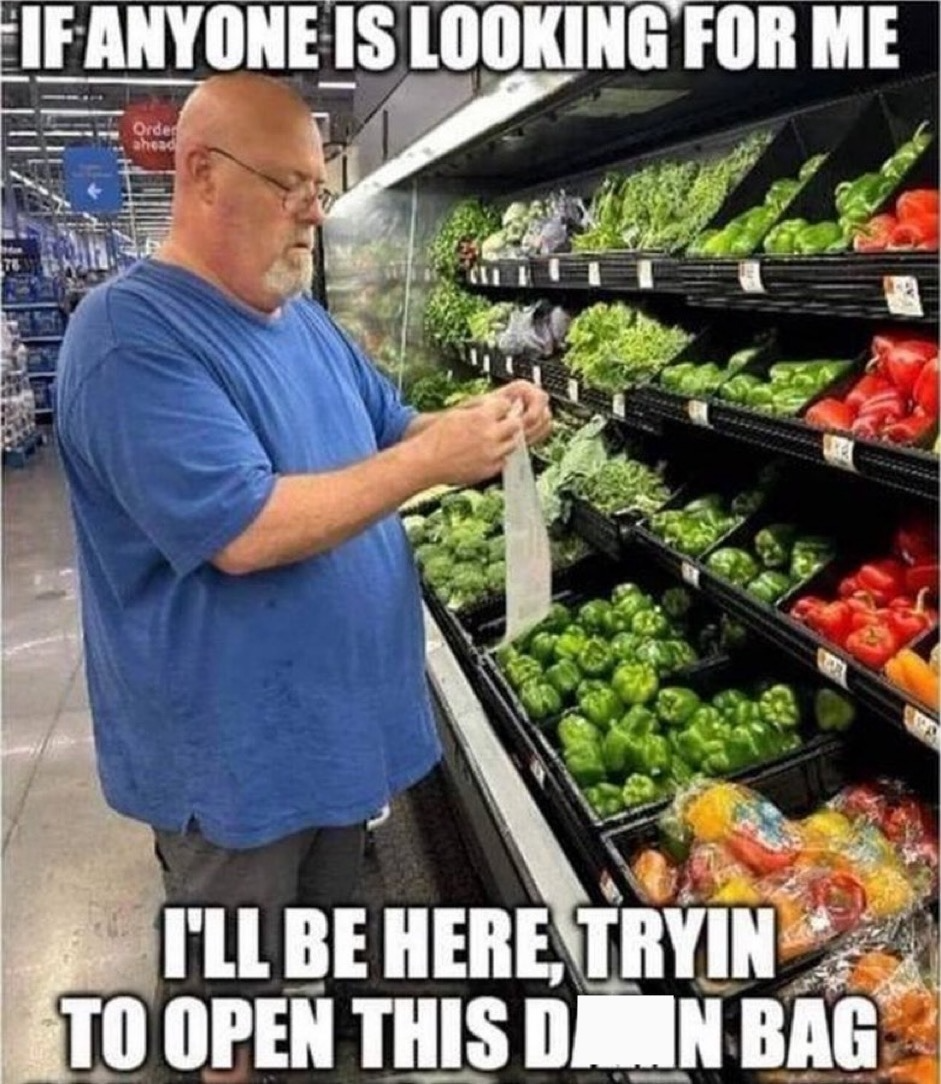
Enter the relatable meme. The truly relatable meme. You could send it to anyone in your family, and they would laugh. There is beautiful clarity in the relatable meme. You don’t have to “get it.” You live it. It’s the distillation of the human experience. Take, for example, this meme. It features a man standing in the produce aisle at the grocery store, trying to open one of the plastic produce bags that are so common at American grocery stores. The text reads, in classic all-caps meme font, “If anyone is looking for me, I’ll be here tryin to open this d***m bag.” It feels like something that you would have seen floating around the net circa 2010. It’s a little grainy, a little old-fashioned, but 100% relatable if you go grocery shopping, which most of us do. These types of memes transcend time and space. You don’t need to be in any in-group in order to understand it. You don’t even need to be familiar with the language of memes. You just need to relate to the near-universal experience of trying to open up one of those pesky produce bags so you can safely transport your cilantro. Seeing one of these memes in the wild is like seeing an oasis in the desert. “Ah,” you think, “finally something I don’t require context for.”
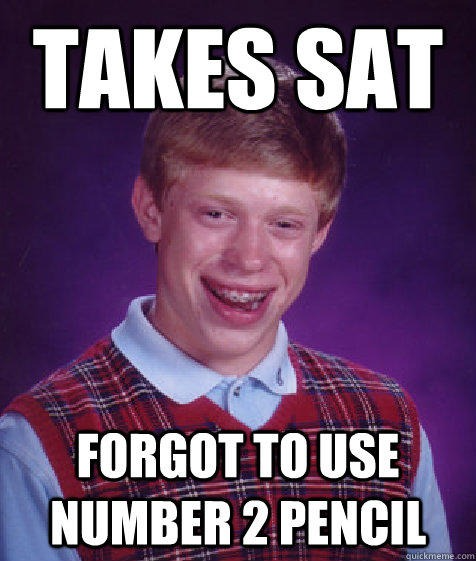
When meme culture was first starting to crystallize, back in the 2000s and early 2010s, there was a common language. You could sift through websites like Cheezburger (cough cough, we're still here) or iFunny and find scads of rage comics and image macros, all featuring the same characters. “Bad Luck Brian” was there to express a moment of comedic misfortune. “Scumbag Steve” was the mouthpiece of your seediest, most doofus-y friend. A “Trollface” indicated deception or trickery. Once you knew the shorthand, you could look at something and know what it meant. Meme culture felt universal. A way for all of us to connect over a shared experience. When we moved away from that, we lost something huge.
There is beauty in specificity. Some of the best art comes from specific, personal, even niche experiences, but they become universal through their particularity. They hit at something human through their exploration of the specific. This is what we should be reaching for in our memes. Not to drive ourselves further into hyperspecific oblivion, but to open ourselves up to a world where we’re all going through the same things.
In a world full of vagueposting and hyper-specific meme creation, be a relatable poster. Our world is polarized enough as it is. Pointing it out in our memes only serves to make those divisions even clearer and stronger. Sure, there is a certain pleasure in seeing a meme that seems like it was made just for you. But it’s even more powerful for millions of people to be able to look at a meme and say, “It me.”